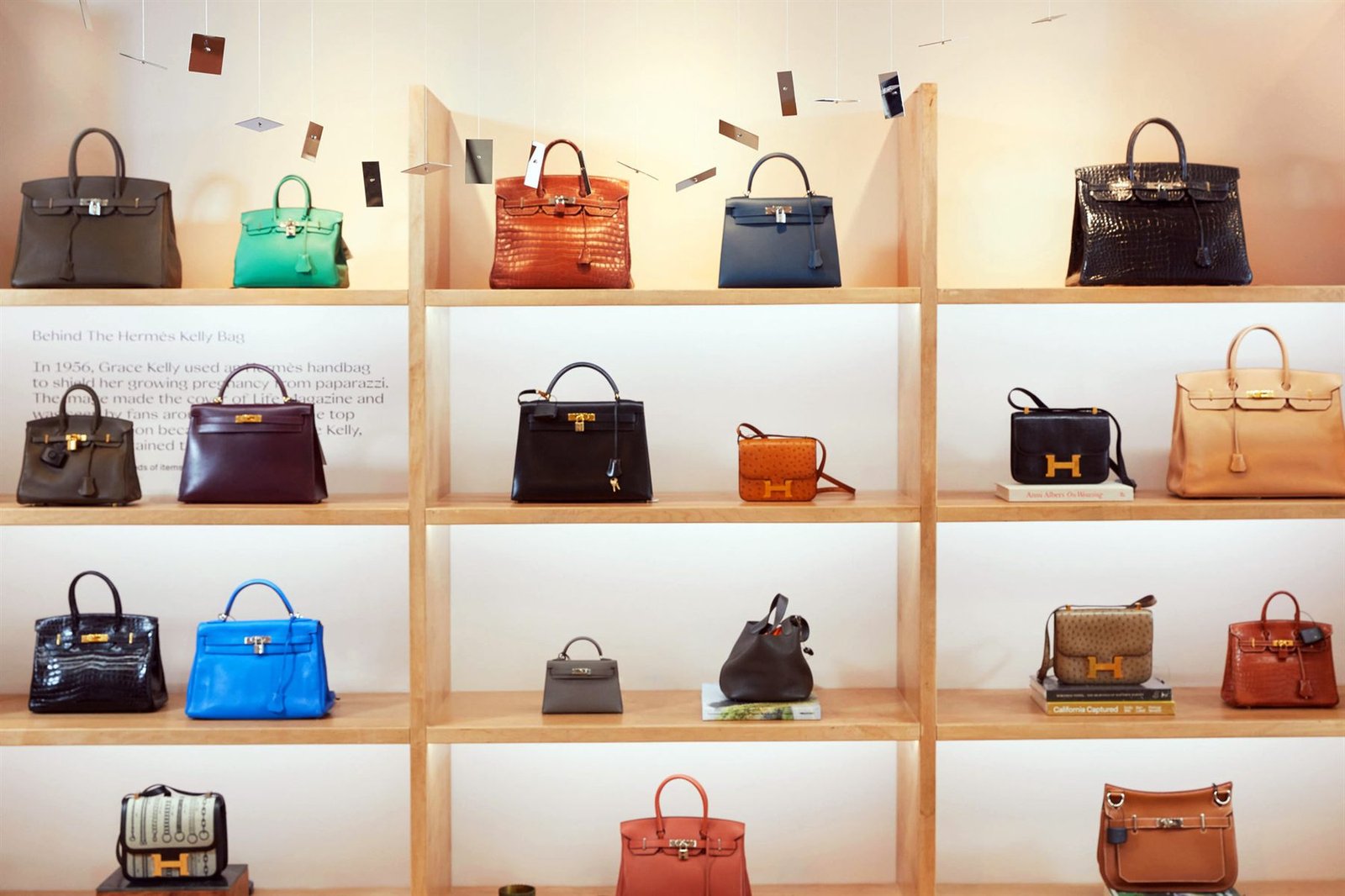
This Hermès leather guide starts where most buyers do not. Most people choosing a Hermès bag start with the model and the colour, and treat the leather as a detail to settle afterwards. It is the wrong order. The leather decides how the bag holds its shape, how it ages, how much it weighs, how it behaves in rain, and how it will sell in ten years. Two Birkin 30s in the same colour with the same hardware can be entirely different objects to live with.
This is a working guide to the leathers you will actually encounter, and what each one is good and bad at.
A Hermès leather guide to the grained calfskins
These account for the overwhelming majority of the market, and for most buyers the real decision sits between the first three.
Togo
A fine, slightly raised grain with a matte finish. Enough structure to hold a Birkin’s shape, enough softness to be pleasant, and a texture that hides small marks better than almost anything else. It is the default answer for a reason.
Its weakness is its ubiquity: because so much production is Togo, it carries no scarcity premium. It is the safe choice, not the interesting one. See Togo pieces.
Clémence
Bullcalf rather than calfskin — a larger, flatter grain, more weight, and a deliberate slouch. A Clémence Birkin relaxes into a soft silhouette within a year or so, which is either exactly what you wanted or a permanent disappointment.
It is also the heaviest of the common leathers. On a 25 that is academic; on a 35 it is a genuine consideration before you have put anything inside. See Clémence pieces.
Epsom
The grain is pressed in rather than natural, which makes it perfectly uniform, unusually light, and rigid. Epsom holds a line — it is why almost every Sellier Kelly and nearly every Constance is made in it.
The trade-off is that it never develops character. In a decade an Epsom bag looks much as it did on day one: cleaner than the alternatives, and less interesting. See Epsom pieces.
The smooth leathers
Swift
Smooth, soft, and the leather that takes dye more deeply than any other in the house. If a Hermès colour has ever stopped you in the street, there is a good chance it was Swift — a grained surface breaks up light and mutes colour, and Swift does not.
It marks easily, slouches readily and shows water spots. Buy it for a colour you love on a smaller piece, not for a bag you will throw into the back of a car. See Swift pieces.
Box Calf
The oldest leather the house uses, and the most demanding. Hard, highly polished, and completely unforgiving of scratches — which is the point, because the accumulated record of those scratches is what produces the patina collectors pursue.
Water is its real enemy. Box spots permanently and there is no reliable remedy. A Box bag should not go out in the rain, and that is a material limitation rather than fussiness. See Box Calf pieces.
The specialist leathers
Chèvre Mysore is goatskin with a fine natural grain and a distinctive lustre that catches light along the ridges. Light, rigid and scratch-resistant, it suits small structured bags and has a following well out of proportion to how much of it exists.
Barenia is the saddle leather the house was built on: untreated, richly scented, and designed to patina dramatically. It marks if you look at it, then absorbs those marks into its character. Not a leather for anyone who wants a bag to stay as it was.
Exotics — alligator, crocodile, lizard, ostrich — occupy their own market, priced by rarity rather than wearability. They also come with CITES paperwork that governs whether a piece can legally cross a given border at all, which is a practical constraint worth understanding before you fall in love with one.
Using this Hermès leather guide in practice
A short version, if you want one:
- A first Hermès bag you intend to actually carry: Togo.
- A structured, formal bag: Epsom.
- Something softer and more relaxed: Clémence.
- A colour you are buying for the colour: Swift.
- A piece you want to age into something: Box Calf or Barenia, and accept what that means.
The one recommendation we would make firmly: handle the leather before committing if you possibly can. Photographs cannot convey weight, and weight is the single thing buyers most often regret.
If you are weighing two specific pieces, ask us — we would rather talk you out of the wrong bag than sell it to you.


2 responses