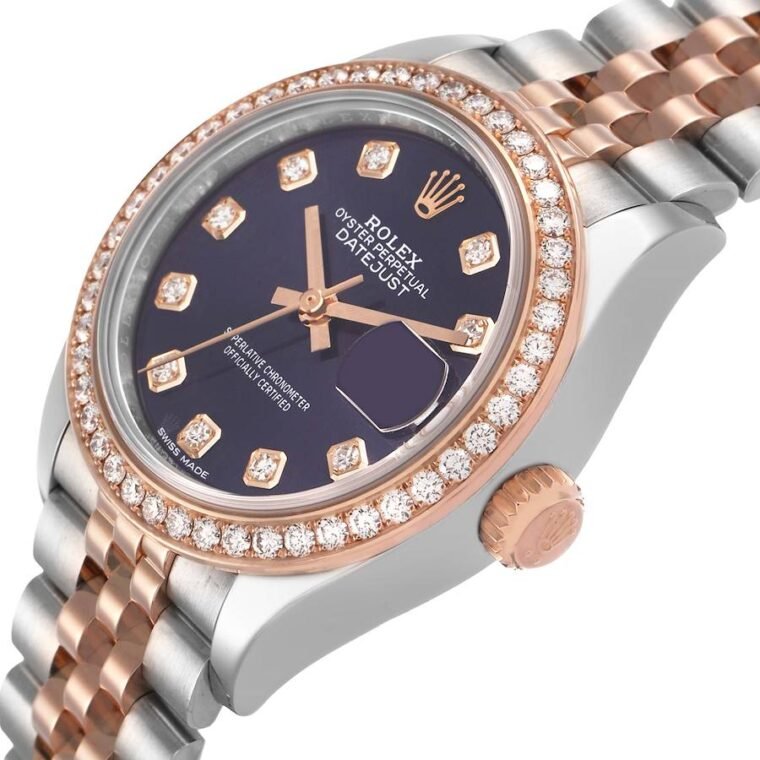
One reference number hides six different watches. Rolex Datejust sizes run from 26mm to 41mm, and the case measurement alone will not tell you how any of them sits. Therefore it is worth reading the lug span and the bracelet before the number.

What the number measures, and what it misses
The figure quoted is case diameter, excluding the crown. However, two watches of the same diameter can wear differently, because lug-to-lug length decides how far the case reaches across the wrist. Meanwhile the bracelet matters as much: a Jubilee tapers and drapes, so it reads softer than an Oyster at the same size.
The small end: 26mm, 28mm and 31mm
The 26mm is the vintage ladies’ size and now reads distinctly period. Rolex replaced it with the 28mm, which keeps the proportions but modernises the movement. Meanwhile the 31mm is the midpoint that suits most wrists looking for a dress watch rather than a jewel.
In short, choose 28mm if you want the watch to read as jewellery, and 31mm if you want it to read as a watch.
The middle: 36mm, the original proportion
The 36mm is the Datejust as it was drawn in 1945, and it remains the most versatile of the family. Because it suits both men and women, it moves fastest on the secondary market. Similarly, it carries the widest choice of dials and bezels, so it is the easiest size to buy exactly to taste.
The large end: 41mm
The 41mm replaced the 40mm-ish “Datejust II” and fixed its proportions. As a result it wears large without wearing clumsy. However, on a slim wrist the lugs will overhang, so try one before committing.
Choosing between Rolex Datejust sizes
Measure your wrist first, then work back. Above all, a 36mm suits almost everyone, which is why it holds value so steadily — and what moves resale value applies to watches as much as to handbags. Meanwhile the metal changes the weight more than the diameter does: a solid gold 31mm outweighs a steel 36mm.
For context, Rolex lists the current sizes, though the discontinued ones are exactly where the secondary market is interesting. In addition, what to check on a pre-owned watch covers condition before you commit.
Datejusts in stock now
Below are examples available as we publish. However, each one is a single unit, so stock moves quickly.
- President Datejust 28mm in yellow gold
- President Datejust 31mm in yellow gold
- Datejust 36mm in Rolesor, 2019
- Datejust 41mm in stainless steel
Browse the full Rolex collection, or see what has just landed on our Instagram.
For a steel sports watch sized with the same care, see how the Audemars Piguet Royal Oak sizes compare.
Common questions
Which of the Rolex Datejust sizes is most popular?
The 36mm, by a wide margin. Because it reads as unisex, it draws buyers from both directions and holds its price accordingly.
Is a 41mm too big for a 16cm wrist?
Usually, yes. In short, the lugs rather than the dial are what overhang, so check the lug-to-lug span before the diameter.
Do the smaller sizes hold value?
The 28mm and 31mm hold well in precious metal, less so in steel. However, a rare dial lifts any size.